Tirzepatide weight loss, with the ending included
The striking average is legitimate. An account that stops there is incomplete.
The number earned its prominence
SURMOUNT-1 gives the best-known tirzepatide weight-loss claim its setting. The 72-week randomized trial enrolled 2,539 adults without diabetes who had obesity, or overweight with a weight-related complication. Neither participants nor study staff knew the assigned treatment.
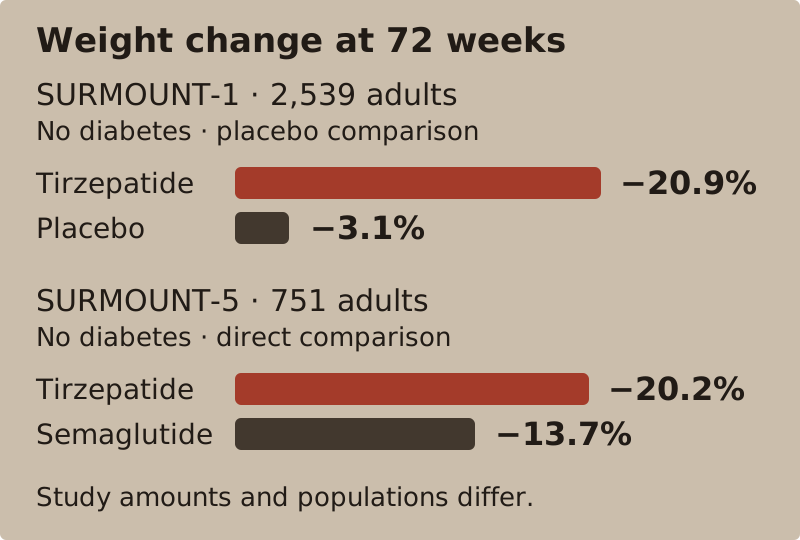
The study groups received 5 mg, 10 mg or 15 mg, or placebo. Mean weight change was -15.0%, -19.5% and -20.9% respectively, versus -3.1% with placebo. These amounts describe only the doses given in the trial. Gastrointestinal problems were the commonest adverse events, mostly mild to moderate and most frequent as doses increased.
I grant the result its full force. The extra promises are where my assent ends: an average is not a minimum, and a result during treatment is not evidence that the loss will persist after withdrawal.
The participant group, comparator and duration define the result and deserve prominence.

Tirzepatide vs semaglutide: a fairer comparison
In SURMOUNT-5’s direct comparison, 751 adults with obesity and without type 2 diabetes were randomized to tirzepatide or semaglutide for 72 weeks. The study used the maximum tolerated dose: tirzepatide 10 or 15 mg, semaglutide 1.7 or 2.4 mg. Participants and staff knew which drug was being given.
Mean weight change was -20.2% with tirzepatide and -13.7% with semaglutide. The reported difference favored tirzepatide. This is stronger support for a comparative claim than setting unrelated trial headlines beside one another, although the open-label design still deserves attention in the account.
I prefer this comparison to the loose claim that tirzepatide is “better.” Better for which outcome, in whom, and against which amount? Here those questions have answers. The separate diabetes comparison appears in the research entry.
Then the drug was withdrawn
SURMOUNT-4 staged the ending instead of guessing at it. Everyone initially received tirzepatide, then some continued while others switched to placebo. The switch group regained substantial weight; continuing treatment maintained and extended the loss.
The post hoc analysis of cardiometabolic changes—a later look at the trial data—found that greater regain went with greater worsening of waist circumference, blood pressure, blood fats and blood sugar. It connects the returning weight to more than a disappointing scale reading.
To my mind, this is the most consequential qualification to the celebrated weight-loss result. It supports thinking about maintenance rather than a brief course with a permanent payoff. It cannot decide how long an individual person ought to receive treatment, or how their benefits and adverse effects balance.
Withdrawal was tested. A durable result after stopping cannot be assumed.
Not every lost pound is fat
The SURMOUNT-1 body-composition substudy separated fat mass from lean mass. About 75% of the lost weight was fat and about 25% was lean tissue. Lean mass measures muscle together with other lean tissue.
I’m unconvinced by either sweeping reassurance or sweeping alarm about that share. The change in tissue is measured, but the functional consequence—how often it changes strength or daily tasks—remains uncertain. The review of resistance exercise and body composition raises the preservation question without establishing a personal treatment plan.
Personal accounts of stalls, weakness or changed appetite have another place in this record: the reports and safety entry. They are anecdotal accounts, not clinical evidence of the cause of a particular experience.