Tirzepatide Effects & Safety: What People Report | Tirzepatide
The short version
Tirzepatide effects divide into two categories: what clinical trials measured and what users actually report day-to-day. The trial record shows large, consistent weight and glycaemic reductions, with gastrointestinal side effects as the dominant tolerability signal. What people report in interviews, exit surveys, and community discussions is richer — and sometimes different in character from what protocol-constrained trials capture. This page reads both. The community reports below are clearly marked as anecdotal, not clinical evidence — they are provenance, not proof. The safety cautions that follow come from published meta-analyses, the FDA prescribing information, and mechanistic reviews, each cited to source. Neither section offers a dose recommendation or personal medical advice.
What people report
These are effects reported by people who have used tirzepatide in real-world settings and by clinical trial exit interviews — anecdotal, not clinical evidence, and not verified by controlled trials. They represent patterns in patient communities and structured interview data, not protocol-measured outcomes. No doses are cited here.
Benefits frequently reported:
Appetite suppression / quieter food noise (frequently reported): Patients consistently describe a dramatic quieting of intrusive food-related thoughts — the constant mental loop of meal planning, snack anticipation, and eating negotiation. Many report forgetting to eat because the drive to seek food simply fades. In exit interviews from SURMOUNT clinical trials, 79–91% of participants described reduced appetite as a top benefit.
Increased energy and reduced fatigue (commonly reported): Across multiple interview studies, around 62–79% of participants described feeling more energetic and less sluggish as weight declined. Early fatigue is sometimes reported in the first two to four weeks while the body adjusts to reduced caloric intake, but the majority report net energy gains over time.
Improved mood, confidence, and emotional well-being (commonly reported): In structured exit interviews, 47–55% of participants described increased positivity and self-confidence. Case reports in the psychiatric literature also document mood improvements alongside weight loss, including reduced depression scores.
Improved blood sugar control and metabolic markers (sometimes reported): Patients frequently report noticing better glucose readings, improved cholesterol and triglyceride results, and reduced insulin requirements — often within the first few months. In one trial, 96% of participants described improved glycaemic control as a top benefit.
Improved sleep quality and sleep apnea symptoms (sometimes reported): A consistent theme in patient interviews is better sleep — faster onset, deeper rest, and waking feeling refreshed. Some users with prior sleep apnea diagnoses describe needing lower CPAP pressure or discontinuing the device entirely after substantial weight loss.
Reduced joint pain and improved mobility (sometimes reported): Patients who have lost significant weight frequently describe reduced pain in knees, hips, and lower back, along with greater ease of movement. Near half of survey participants in one analysis reported less joint discomfort.
Adverse effects frequently reported:
Nausea, especially after dose increases (frequently reported): Nausea is the most commonly reported side effect, affecting roughly 25–50% of users in community reports and post-market data. It typically peaks in the first one to two weeks after a new dose and generally fades by weeks two to four. Most users describe it as manageable rather than severe.
Constipation and/or diarrhoea (commonly reported): Community members frequently describe an alternating pattern — constipation giving way to loose stools — tied to tirzepatide's slowing of gastric emptying. Constipation is reported by roughly 15–20% of users; diarrhoea follows in 17–25%, typically peaking around day four post-injection.
Injection site reactions (commonly reported): Redness, mild itching, tenderness, and occasional bruising at the injection site, typically appearing within hours of injection and resolving within two to five days. Rotating injection sites is the most commonly shared mitigation approach.
Weight loss plateau / stall (commonly reported): Plateaus — periods of several weeks with little or no scale movement — are widely discussed and described by clinicians as a normal part of the weight-loss arc. They are reported most often after the initial three to six months.
Hair thinning / shedding (sometimes reported): Increased hair shedding is reported by a subset of users, typically appearing three to six months after starting and attributed to rapid weight loss (a pattern called telogen effluvium) rather than the drug itself. Clinical trial data recorded hair loss in approximately 4–5% of participants versus 1% in placebo groups.
Sulfur burps (sometimes reported): Foul-smelling, egg-like burps linked to slowed gastric emptying and shifts in gut microbiota. Reported in roughly 3–5% of users in post-market data.
Taste changes and food aversions (sometimes reported): Some users report a metallic or altered taste, or previously enjoyed foods suddenly seeming too sweet or physically off-putting. These tend to improve after the initial weeks or following dose stabilisation.
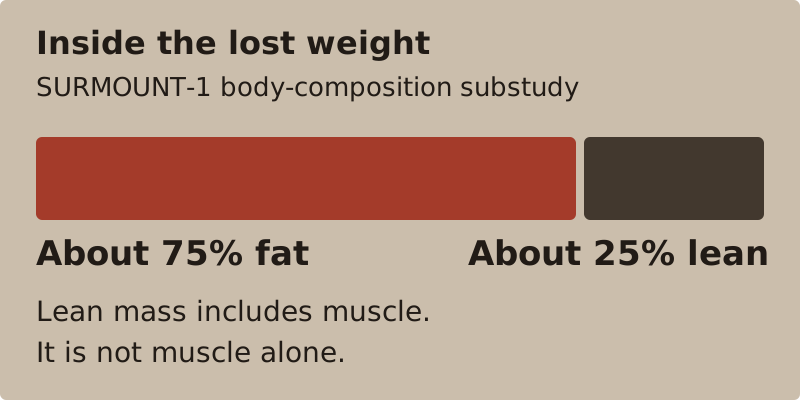
Muscle and lean-mass concerns (sometimes reported — mixed): Some users engaged in strength training notice decreased performance or a softer physique. Trial-level body composition data suggests approximately 25–30% of lost weight is lean mass — consistent with typical weight-loss patterns but larger in absolute terms given the magnitude of total weight loss.
Tirzepatide side effects: safety cautions from the literature
The following safety signals come from published meta-analyses, the FDA prescribing information, and peer-reviewed mechanistic reviews. Each is cited.
Gastrointestinal intolerance during dose escalation: Dose-dependent nausea, vomiting, diarrhoea, constipation, and decreased appetite are the most common adverse effects, emerging chiefly during the stepwise dose increase and generally easing with continued exposure. A pooled meta-analysis of 13 trials in people with obesity without diabetes put the overall gastrointestinal adverse-event risk at roughly 2.9-fold above placebo [16][17][18][19]. These effects are mostly mild to moderate but drive the bulk of discontinuations.
Thyroid C-cell tumours / medullary thyroid carcinoma and MEN-2 (boxed warning): The FDA prescribing information carries a boxed warning derived from rodent studies. Whether this translates to humans is not established. The label states the drug should not be used by people with a personal or family history of medullary thyroid carcinoma or Multiple Endocrine Neoplasia syndrome type 2 [6][20].
Gallbladder and biliary disease: A meta-analysis of nine randomised trials (9,871 participants) found a significantly increased risk of the composite of gallbladder or biliary disease versus controls — relative risk 1.97 (95% CI 1.14 to 3.42) [10]. A separate meta-analysis of 12 trials reported a comparable signal [21]. Rapid weight loss is a known precipitant of gallstones, which fits the mechanism.
Pancreatitis: Acute pancreatitis is a recognised class concern. However, the meta-analysis of nine randomised trials found no statistically significant increase versus controls (relative risk 1.46, 95% CI 0.59 to 3.61) [10]. A large propensity-matched cohort study actually showed a lower five-year recurrence rate among tirzepatide users with a prior episode [22]. The signal is monitored and label-flagged, but not confirmed at trial level.
Hypoglycaemia when combined with insulin or sulfonylureas: On its own, tirzepatide stimulates insulin secretion in a glucose-dependent fashion, so hypoglycaemia risk is low. The risk rises when added to a sulfonylurea or insulin; the FDA label advises that a lower dose of the concomitant agent may be needed [6][23].
Delayed gastric emptying and perioperative aspiration risk: Tirzepatide transiently delays gastric emptying. With an approximately five-day half-life and slowed gastric motility, retained gastric contents are a theoretical concern for aspiration under anaesthesia. Extended pre-procedural fasting is an increasingly recognised periprocedural consideration [24][25].
Lean-mass and skeletal-muscle loss: Approximately 25% of the weight lost during treatment is lean mass in the SURMOUNT-1 DXA substudy [7]. A systematic review across incretin trials found a median lean-mass share of weight loss near 28% [15]. The clinical significance — specifically functional impact — is still being defined.
Weight regain after stopping: Benefits depend on continued treatment. SURMOUNT-4 demonstrated that participants switched to placebo regained substantial weight while those continuing tirzepatide kept losing [8]. Weight regain tracked with worsening cardiometabolic markers [9].
Reduced oral-contraceptive reliability: The FDA prescribing information advises that delayed gastric emptying may reduce the effectiveness of oral hormonal contraceptives, particularly around the initiation dose and each dose increase [6][25].
Hair loss (telogen effluvium): Reversible diffuse hair shedding has been reported, attributed largely to the physiological stress of rapid weight loss rather than a direct drug toxicity. It is generally self-limiting once weight stabilises [26].
Tirzepatide reviews: what the withdrawal data show
The pattern that emerges most clearly from the tirzepatide reviews and withdrawal studies is that the drug's effects are real, large, and dependent on continued use. SURMOUNT-4 is the clearest demonstration: participants who achieved substantial weight loss during open-label treatment and then stopped regained a mean of approximately 9.7 kg, while those who continued treatment did not [8]. Cardiometabolic markers — blood pressure, lipids, glycaemic indices — worsened proportionally with the regained weight [9].
The discontinuation-due-to-adverse-events rate is higher with tirzepatide than with some comparator incretins: a meta-analysis of three head-to-head trials versus dulaglutide found a roughly 32% higher discontinuation rate driven largely by gastrointestinal effects [27]. That is a tolerability-efficacy trade-off rather than a safety hazard — the drug produces more weight loss and more GI side effects than the comparator.
For those starting out, the early weeks of treatment carry the highest GI burden, and dose increases repeat that pattern at each step. Most who persist through the initiation phase report that tolerability improves markedly once the dose stabilises.
Then and now: tirzepatide's history
Tirzepatide grew out of decades of incretin science. After the gut hormones GIP and GLP-1 were identified as the drivers of the 'incretin effect' — the amplification of meal-stimulated insulin that accounts for roughly 50–70% of the post-meal insulin response — researchers pursued the idea that engaging both receptors with a single molecule might outperform GLP-1 agonism alone. Eli Lilly's candidate LY3298176 was reported in 2018 as a fatty-acid-modified 39-amino-acid peptide that activated both receptors, lowered glucose, and reduced body weight more than a selective GLP-1 agonist in mice, with early Phase 1 data in 142 human subjects supporting once-weekly dosing [1]. In vitro work then characterised it as an imbalanced, biased dual agonist favouring the GIP receptor [12].
Clinical development split into the SURPASS programme in type 2 diabetes and the SURMOUNT programme in obesity. Head-to-head superiority versus semaglutide was established in both. The FDA approved it for type 2 diabetes in May 2022, for chronic weight management in November 2023 [28], and later for moderate-to-severe obstructive sleep apnea in adults with obesity. Beyond-glycaemia readouts followed: SUMMIT in heart failure with preserved ejection fraction [29], SURMOUNT-OSA in sleep apnea [14], and SYNERGY-NASH in metabolic dysfunction-associated steatohepatitis [30].
The arc from a 2018 preclinical paper to a 2025 cardiovascular outcomes trial (SURPASS-CVOT) is roughly seven years — a typical regulatory timeline for a novel mechanism. The evidence base that resulted is among the most rigorous produced for any metabolic drug.